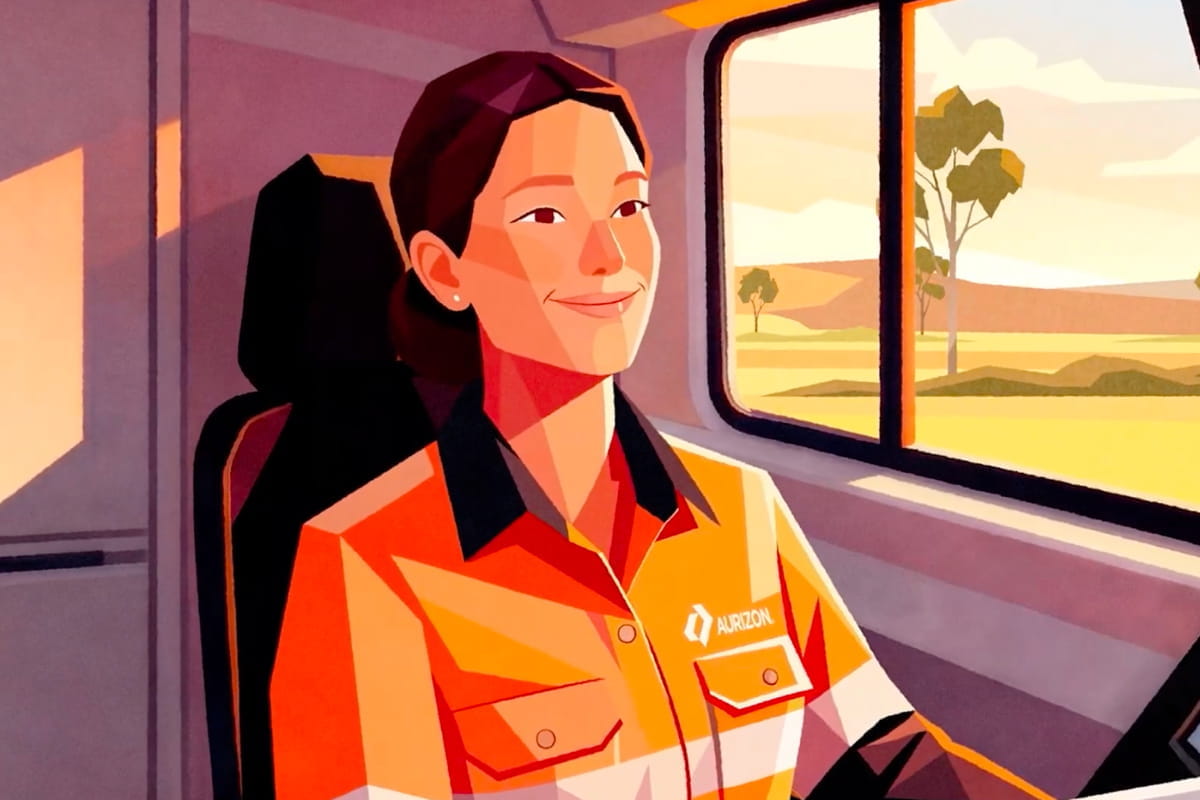
Why waiting at level crossings matter

Every day, Aurizon trains transport millions of tonnes of essential commodities across the country – connecting communities, supporting industries, and keeping Australia moving.

A fully loaded train can take up to two kilometres to stop. It cannot swerve. It cannot brake instantly. And it cannot react to impatience.

Every year, over 1,000 ‘near misses’ occur when people don’t wait at level crossings, despite the signs, and often additional measures too.

While it may be frustrating to wait – especially when you have somewhere important to be, risky behaviour can lead to serious injury, loss of life, and lasting trauma for everyone involved – including our train drivers, who carry the impact long after.

Respecting the sign is a simple choice that protects a lifetime of moments – not just for you, and your passengers, but for your loved ones and our train drivers too.

rail-safety-education-school

How you can help keep your community safe

As Australia’s largest rail freight company, we are committed to ensuring safety for ourselves, each other, and the communities in which we operate.

We collaborate with many organisations to promote safety awareness among those who interact with rail operations in their local community.

  • Request a rail safety presentation for your school by sending an email.
  • Download and share resources from the links below.
  • Immediately report dangerous behaviour to 000.
Level crossing safety is a shared responsibility

This level crossing safety campaign is told through the eyes of those directly impacted by level crossing events, especially train crew and the first responders that see the trauma and devastation caused by near-misses and collisions. Listen to their stories and find out how you can help make a difference.

aurizon-train-level-crossing

Respect the sign. The facts say why.

Every day, thousands of decisions are made at level crossings across Australia. These key statistics highlight why paying attention – and respecting the sign – is critical to keeping everyone safe.

  • Over 1,000 ‘near misses’ occur every year at rail level crossings across Australia.
  • A fully loaded train can take up to two kilometres to come to a complete stop – that’s the equivalent of 20 football fields.
  • There are approximately 23,000 level crossings nationwide.
  • Only around 21% of level crossings have active protection, such as warning lights or boom gates.
  • Around 79% are passive level crossings that have either ‘Stop’ or ‘Give Way’ signs, and rely on drivers and pedestrians to pay attention and check before crossing.
  • Around 75% of collisions at level crossings occur during the daylight hours, when visibility is clear.
Aurizon’s commitment

There is also a significant amount of work and investment underway to manage other contributing factors to level crossing safety. These include Aurizon: 

  • working with all levels of government to increase investment in level crossing upgrades and to advocate for a consistent national approach to safety priorities
  • collaborating with regulatory, safety and enforcement agencies to assess and implement effective technology and enforcement strategies to help prevent level crossing incidents or near misses, including in-car navigation alerts
  • participating in industry working groups under the National Level Crossing Strategy 2023-2032 to deliver specific initiatives aimed at reducing the incidence of fatalities and injuries across Australia's level crossings.
Did you know?
How long does a freight train take to stop?

Trains can weigh up to 14,000 tonnes or the equivalent of 9,000 cars. A fully loaded freight train can take more than two kilometres to come to a complete stop. Once a train driver applies the brakes, it is often too late to avoid a collision.

aurizon-long-train

How are level crossings marked for safety?

Australia has around 23,000 level crossings. Each of these crossings have a warning sign and many crossings also have flashing lights, alarm bells and boom gates for added protection and safety.

The message is simple - Respect the sign. Every time.

regional-level-crossing

What should I do when approaching a level crossing?

Always slow down, look for warning signs, and be prepared to stop. If lights are flashing, bells are sounding, or boom gates are down, you must stop and wait until the train has fully passed and the signals have stopped flashing. 

What are the most common risky behaviours at level crossings?

Common unsafe behaviours include:

  • Driving around boom gates
  • Ignoring flashing lights
  • Using mobile phones
  • Misjudging train speed
  • Rushing 
  • Following other vehicles too closely
  • Walking across tracks with headphones on